Tool comparisons5 min read
ChatGPT vs Midjourney for Fashion Portraits
Not "which is better" but which one fits the job. How the two tools differ on prompt handling, identity consistency, colour accuracy, and iteration speed — and when the answer is to use both.
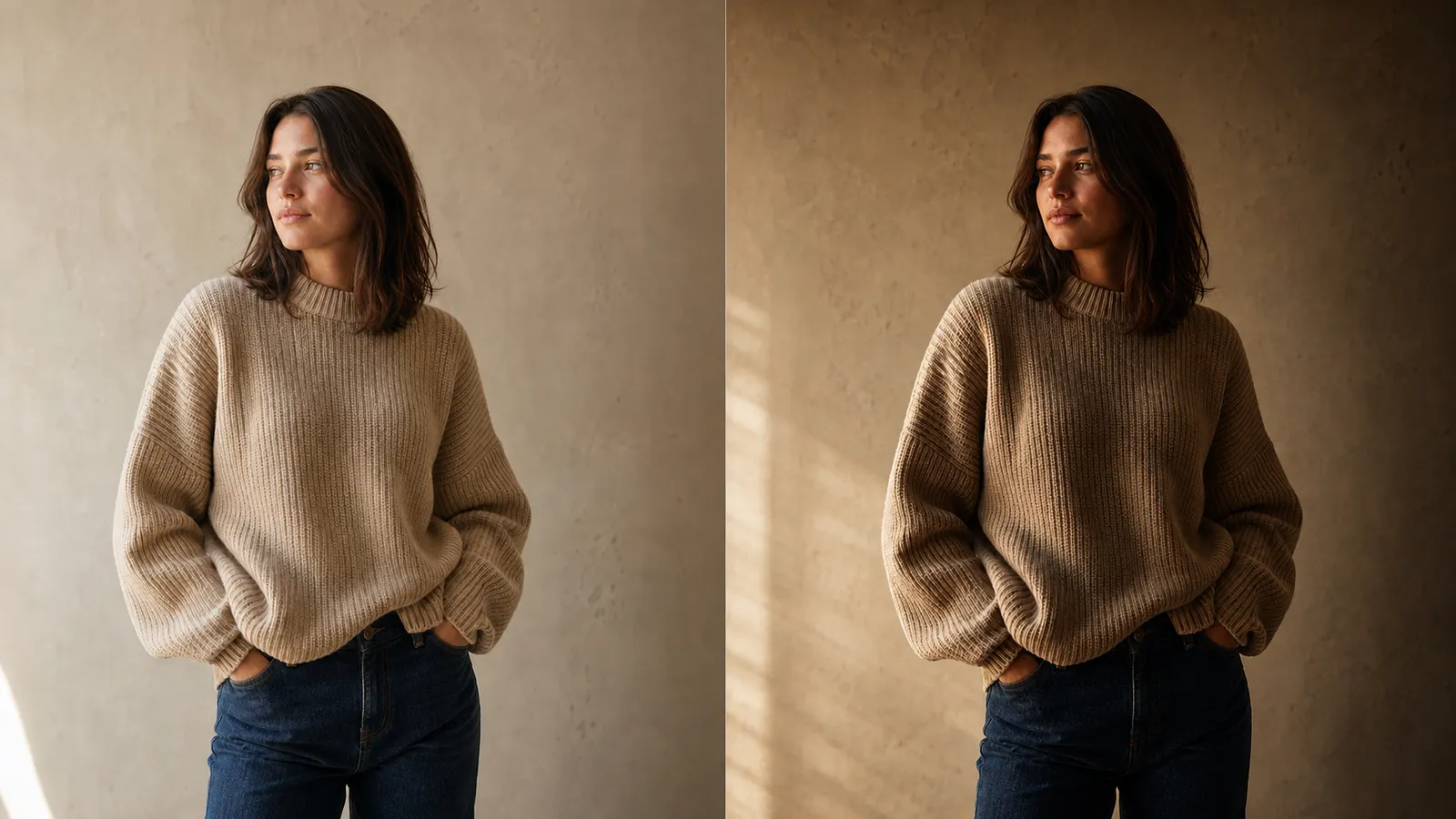
The honest answer to “which tool should I use” is that they fail at different things, and which failure you can tolerate depends entirely on what the image is for.
Before going further: if your prompts are still one-liners, tool choice is not your bottleneck. A well-constructed prompt in the weaker tool beats a lazy prompt in the stronger one, every time. Start with the four-layer framework and come back when the difference between tools is actually what is limiting you.
The one difference everything else follows from
ChatGPT edits. Midjourney generates.
ChatGPT’s image generation lives inside a conversation. You can say “same photo, but make the sweater cream instead of beige” and it works on the existing image. It holds context across turns. It takes correction.
Midjourney generates from a prompt string. Variations and reference parameters exist, but the interaction is fundamentally “submit a spec, receive images” rather than a conversation with a shared subject.
For fashion catalogue work — where the whole task is one model, many garments, everything else held constant — this difference dominates almost every other consideration.
Where each one lands
| ChatGPT (GPT Image) | Midjourney | |
|---|---|---|
| Literal prompt following | Strong — does what you asked | Interprets; adds its own aesthetic |
| Identity across images | Strong via conversation + reference | Workable via reference params, more effort |
| Iterative correction | Native — just say what to change | Re-prompt and re-roll |
| Colour accuracy | More literal, closer to spec | Tends to grade toward its house look |
| Out-of-box beauty | Competent, plainer | Noticeably more striking |
| Text in image | Usable | Historically weak |
| Speed per image | Slower | Faster |
| Ease of many variations | Slower | Excellent |
Prompt literalism cuts both ways
Midjourney has a strong aesthetic point of view. Ask for a portrait and you get something with real photographic intent — flattering light, considered composition, a mood. That is a genuine advantage when you want an image to look good.
It is a disadvantage when you need an image to be correct. If you specify a cool grey sweater and Midjourney’s aesthetic pulls toward warm cinematic grading, you may be shipping a colour that does not match your product. ChatGPT tends to give you a plainer image that is closer to what you literally asked for.
For product listings, literal beats beautiful. For a campaign image or social content, the opposite is often true.
Identity consistency: the deciding factor for catalogues
This is where the conversational model pays off most. As covered in the consistency guide, the workflow that holds a face steady is: master image → attach as reference → change one thing → stay in the same session.
ChatGPT supports every step of that natively. Midjourney can approximate it with character-reference parameters, and people do run catalogues on it, but you are assembling the workflow rather than using one the tool is shaped around.
If your job is twenty products on one model, this alone is usually decisive.
Where Midjourney clearly wins
Exploration. When you do not yet know what you want, generating many strong variations quickly is exactly the right tool, and Midjourney is much better at it. Use it to find a direction, then rebuild that direction as an explicit four-layer prompt.
Images that need to be striking. Campaign visuals, lookbook covers, social content that competes in a feed. Here the house aesthetic is doing work for you rather than against you.
Volume. If you need forty options rather than one correct image, the speed difference compounds.
How to choose, concretely
Use ChatGPT when:
- You need the same model across multiple images
- Colour and garment detail must match a physical product
- You are iterating toward a specific result you can already describe
- The image is a listing image
Use Midjourney when:
- You are exploring and do not have a fixed target
- The image needs to be striking more than it needs to be accurate
- You need many variations quickly
- It is campaign or social work, not a listing
Use both when: you are doing catalogue work and want it to look good. This is the most common real answer.
The two-tool workflow
The practical pattern for anyone doing this seriously:
- Explore in Midjourney. Generate broadly. Find the aesthetic direction — the light, the mood, the styling — without worrying about consistency.
- Reverse-engineer it into a four-layer prompt. Write down explicitly what you liked: the light direction and quality, the focal length and aperture, the framing, the palette. Turn taste into a specification.
- Build the master image in ChatGPT using that spec, following the consistency workflow.
- Generate the catalogue in ChatGPT, one conversation, master image attached, one variable at a time.
- Go back to Midjourney for the hero and campaign shots where striking matters more than consistent.
Step 2 is where the value is. The reason exploration in Midjourney is useful is not the images it produces — it is that it teaches you what you actually want, which you then have to be able to state in words. That is the same skill the four-layer framework is built on.
The short version
If you are doing ecommerce catalogue work and can only use one: ChatGPT, because identity consistency and colour literalism are the two things that determine whether the images are usable, and it is better at both.
If you are doing social or campaign work and can only use one: Midjourney, because striking matters more than accurate, and it is better at striking.
If you can use both, the split is: Midjourney to find out what you want, ChatGPT to produce it twenty times.
Related guides
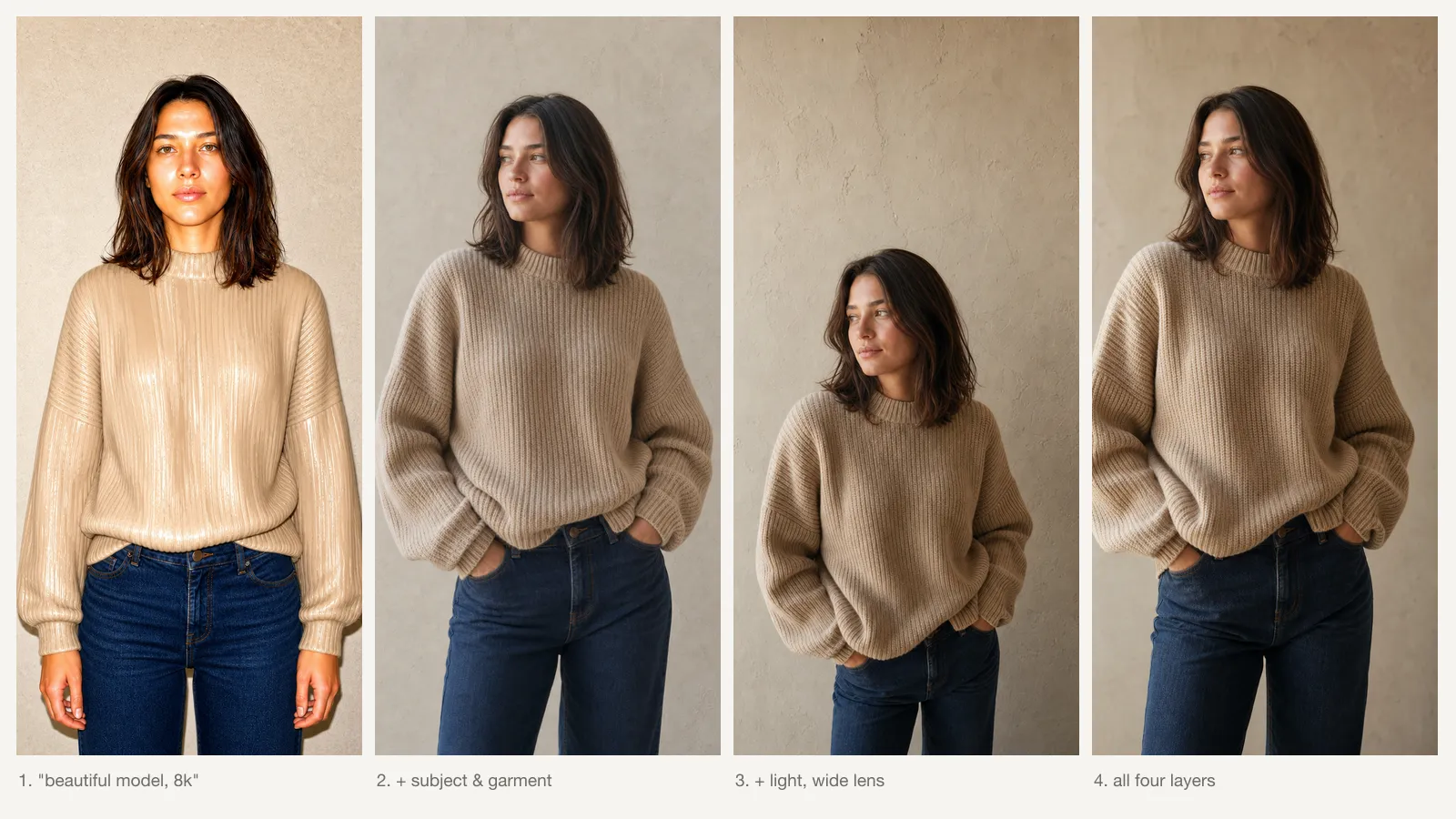
Fundamentals
Why "Beautiful Model" Is the Worst Prompt You Can Write
The gap between a plastic-looking AI portrait and a usable one is not the model you use. It is the four layers most prompts leave out — subject, garment, light, and camera.
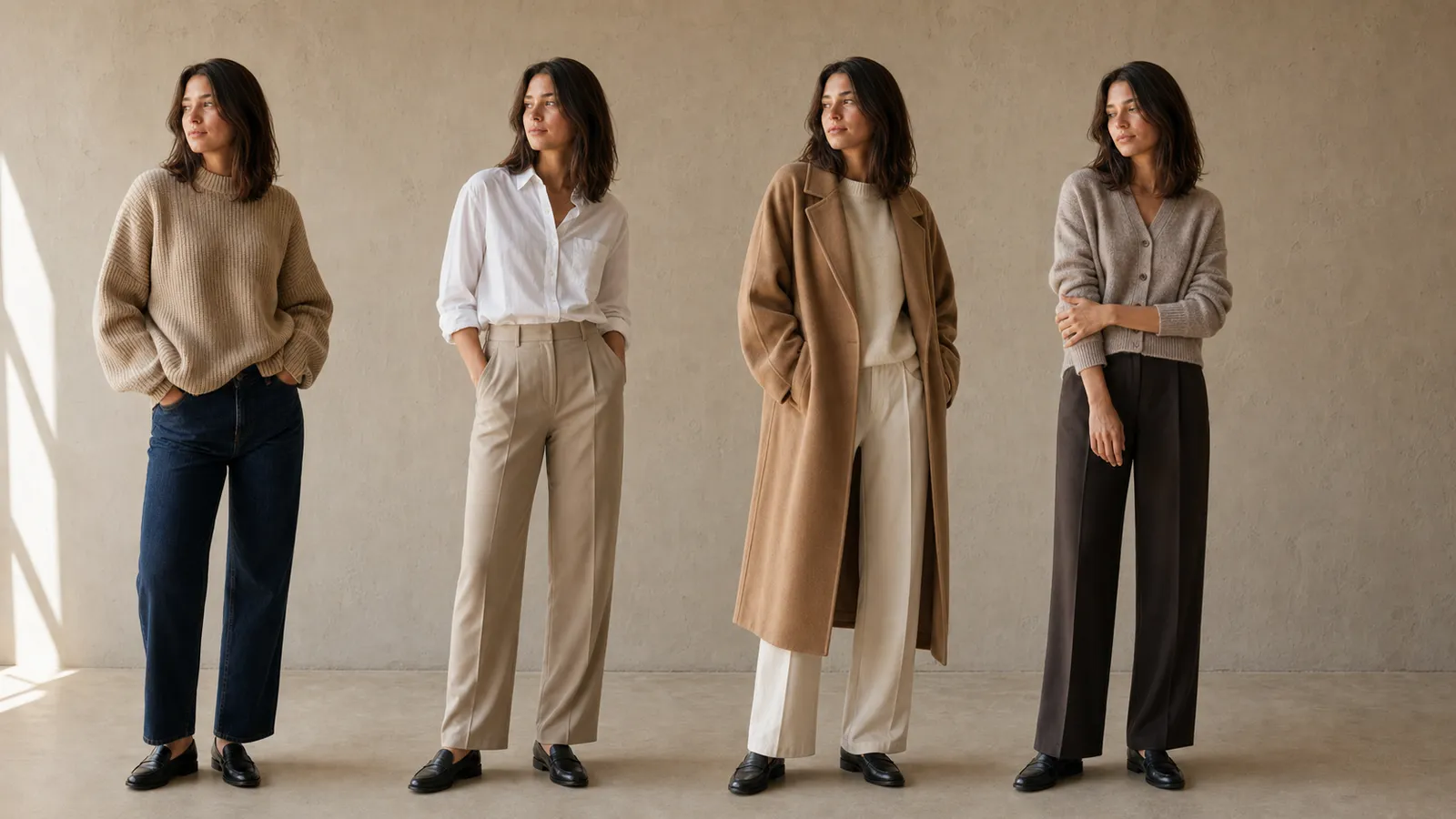
Ecommerce
How to Keep the Same AI Model Across an Entire Catalogue
The same prompt gives you a different face every time. Here is why identity drifts between generations, and the seed-plus-reference workflow that actually holds a model steady across twenty images.